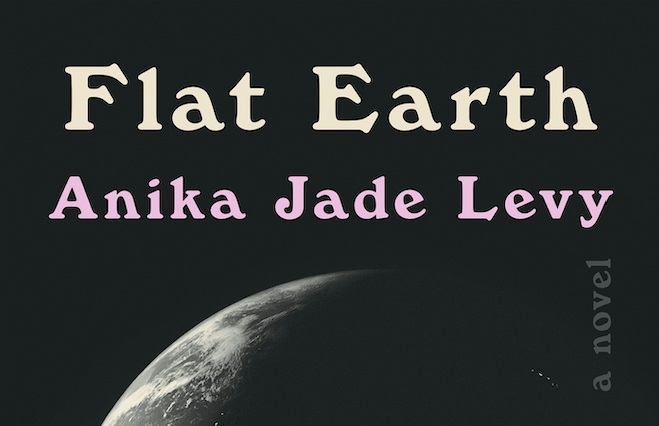
Have you ever slipped off the monkey bars at a playground and fallen to the ground with the wind knocked out of you? That experience would describe the novel Flat Earth by Anika Jade Levy, which creates an anthropological study of the modern world. It is comparable to Ottessa Moshfegh’s My Year of Rest and Relaxation in terms of its themes of isolation and the floundering that the two main characters both experience.
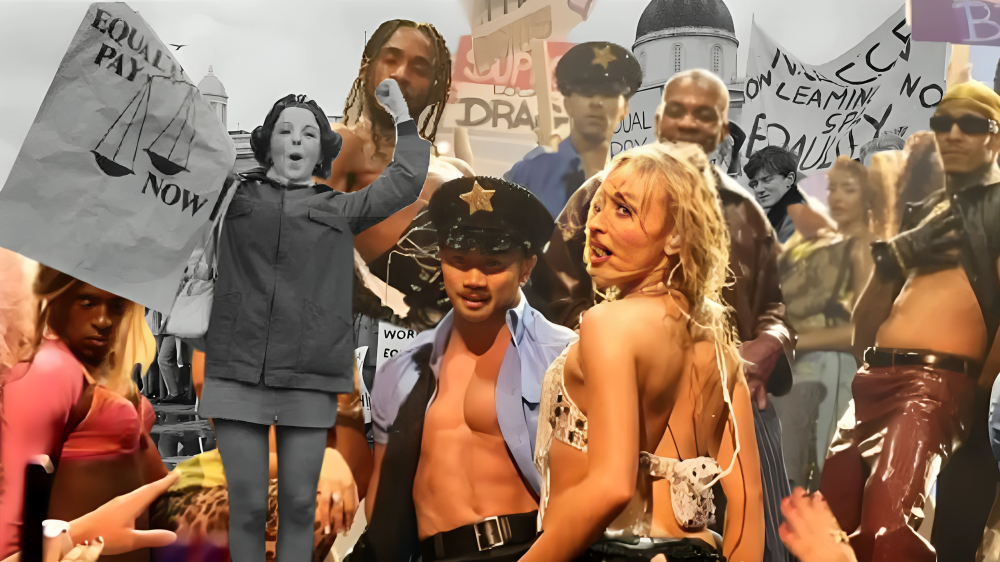
Avery, the main character, a twenty-something grad student in New York, suffers from ennui and envy of her friend Frances, who is creating a documentary about “the true America-” conspiracy theorists littered in rural parts of the country. The title refers to this documentary and to the “flat” quality that people are reduced to when on the screen, something that the novel concerns itself with throughout. Much of the novel is Avery reckoning with her jealousy indirectly, through her relationship with two men; a law professor that invalidates her every opinion, and a sculptor–both emotionally unavailable. Together with an Australian life coach, a job in an uber-conservative dating app called Patriarchy (that should give you an idea), and a plethora of men 30 years older than her, Avery is ready to…wreck her life. At its controversial core, Flat Earth traipses around the idea that women crave a return to a life of homemaking and raising children–a reversal of longtime efforts to further women’s rights. Some women feel fed-up with the expectations of money-making thrust upon them, but Frances serves as an antithesis to this viewpoint- she is effortlessly successful, wealthy, and fits delicately into the exact type of woman Avery wants to be.
Avery is extremely affected by her parasocial relationship with Frances. As a result of Frances’ abrupt departure from New York, Avery is thrown into a spiral of doubt- her body is too imperfect (yet the ideal feminine figure,) and she can’t fathom her own sexuality as it is too tied up in her self-value. She has no internal control of anything about herself; the multitude of external forces around her run her existence. The adderall shortage of New York bleeds into all aspects of her life.
Anika Jade Levy composes a symphony that screams against modernity. That modernity has its consequences. For Avery, those are her wounds that gush with blood every time she is on the phone. Avery doesn’t spare a thought for anyone, and that includes the reader. The information provided doesn’t ever break down the wall that Avery creates with her reader- in fact, information is provided haphazardly. Flat Earth isn’t particularly unique- it fits nicely with the kind of books that could only have been published in the last five years. It has a replaceable female protagonist with a kind of ribald humor, and the same setting of New York City that dozens of other novels claim. It blatantly defies Chekhov’s gun–the concept of if a gun is introduced in the story, on the mantlepiece, it will go off at some point–however, it seems difficult to discern if it reflects a quality of Avery’s life that is ephemeral, or a lack of specificity in the novel. Nothing is constant or permeating except the sickening sense of envy Avery feels, and the consequential anxiety the reader feels.
But that’s not the point. Flat Earth powerfully reflects on the struggles put on women’s mental health from living in a digitized society. It reads with a vigor, but can also paralyze the reader because of its inability to intervene. Only after reading it can the reader look around and see what has been revealed to them about the unfamiliar future slowly creeping towards us.
Flat Earth was officially debuted on November 4th, 2025.