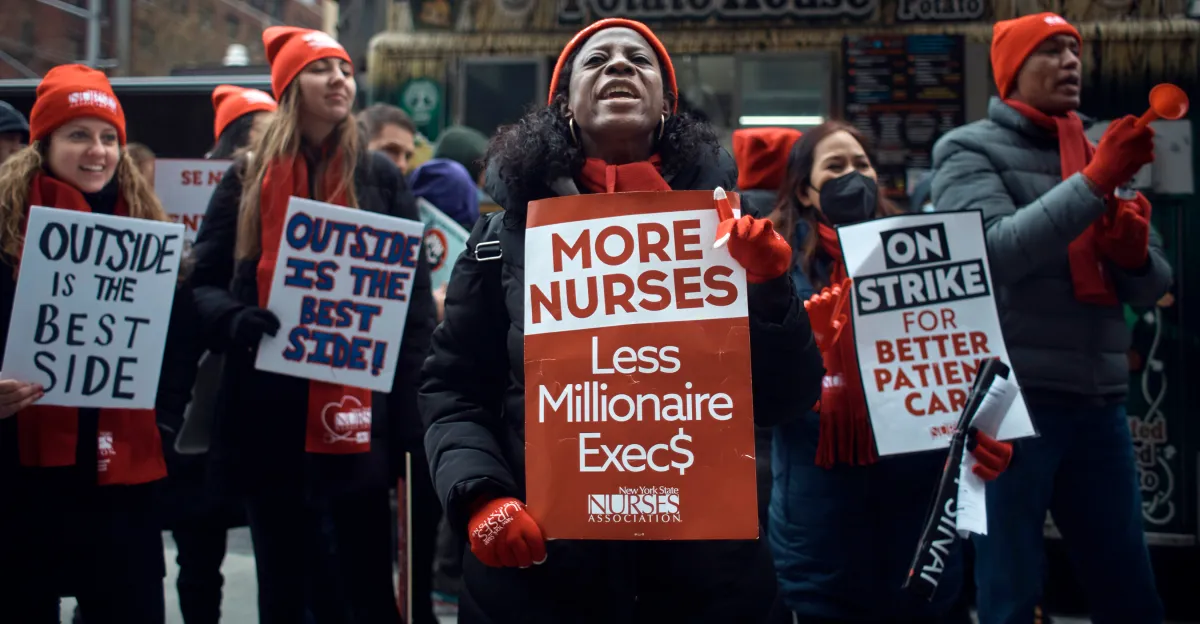
The largest nursing strike in New York’s history started on Monday January 12th. It is estimated that around 15,000 nurses from five private hospital systems, such as Mount Sinai and NewYork–Presbyterian, are on strike.
They are striking for fair pay, better staffing and improved safety.
Previously, on Sunday the 11th, New York State Nurses Association (NYSNA) hoped to be able to make progress with negotiating for fair contracts with the hospitals in order to evade this strike. However, the hospitals disagreed, making no effort to try. So, on January 12 at 6:00 am, thousands of nurses congregated outside of hospitals, forming picket lines around the city.
Newly-inaugurated NYC Mayor Zohran Mamdani offered words of support to the nurses. “They are not asking for a multi-million dollar salary. What they are asking is for their pensions to be safeguarded, to be protected in their own workplace, [and] to receive the pay and the health benefits that they deserve,” Mamdani said.
These actions come three years after a 2023 nursing strike where it is estimated around 7,000 nurses went on strike around the same time this one is taking place. That strike lasted for three days before nurses and hospitals were able to create a historic contract that allowed both parties sufficient satisfaction. This contract ensured the hire of nurses for a safer staffing ratio and a roughly 19% pay increase over three years.
However, this contract expired on the 31st of December. Now nurses are saying that hospitals are not meeting on things they agreed to. Because the same issues are once again prevalent, so too are the nurses’ strikes. There are still serious concerns about staffing, safety, and salary to the point where these nurses feel that they have to strike not just for themselves but also for their patients.
As the strike continued into February, negotiations between NYSNA and hospital management intensified. After more than four weeks on strike, tentative agreements were reached with Mount Sinai and Montefiore, covering roughly 10,500 nurses. These proposed three-year contracts include wage increases of about 12%, protections for nurses’ health benefits, stronger workplace violence prevention measures, and improvements to safe staffing policies. Nurses at those hospitals are expected to vote on whether to ratify the agreements, and if approved, they could return to work as early as mid-February.
However, the strike continues at NewYork–Presbyterian Hospital, where nurses say staffing concerns and workload issues remain unresolved. Picket lines are still active at those facilities as negotiations continue.
Currently, many hospitals whose nursing staff have gone on strike have hired temporary nurses to make sure they can continue to accept new patients and carry on with normal routines. However, these protests have negatively affected patients due to not having enough staff and as a result patients’ procedures have been delayed. The governor of New York, Kathy Hochul, has raised serious concerns about these protests as they could possibly jeopardize patient care and so she encourages both the unions and hospital management to go back to negotiations.
Staffing remains one of the most significant issues in the dispute. These private hospitals have the money; CEO salaries at NewYork–Presbyterian, Montefiore and Mount Sinai, are nearly 12,000% more than that of the average nurse, according to the NYSNA. And yet they still refuse to use this money that they are receiving to hire more workers and improve overall wellbeing for their workers and patients.
Another big concern for nurses is safety. In November of 2025, a gunman threatened to shoot up a Mount Sinai Hospital. Nancy Hagans, NYSNA’s president, also brought attention to an incident that happened on January 9th when a man entered a hospital wielding a sharp object, barricaded himself in a room with another person, and then threatened to hurt himself and others.
On January 13th, management of some hospitals in New York threatened nurses with drastically cutting down their health care benefits so that they would settle for a less than optimal contract. This could affect not just the striking nurses but the thousands of nurses and their families enrolled in NYSNA’s health benefit plan.
The New York nursing strike demonstrates hospital management’s failure to honor past agreements and ensure safe working conditions. These oversights have forced nurses to take action to protect both themselves and their patients. Nurses have stated that until these hospitals can agree to their terms and conditions, picket lines will continue everyday at 7am.
Sources:
- The City NYC News – Mount Sinai ‘Unlawfully’ Fired Three Nurses on Eve of Strike, Union Says
- The Guardian – New York City expects biggest nurses strike as nearly 15,000 set to walk off job
- ABC – Largest nursing strike in New York City history begins amid stalled contract negotiations
- Politico – Nearly 15,000 nurses go on strike at top New York City hospitals
- NYSNA Press – Largest Nurse Strike in NYC History Continues into Second Day
- The Guardian – More than 7,000 nurses go on strike at two New York City hospitals
- Reuters – Severe staffing shortages expected at New York hospitals as 15,000 nurses go on strike