Wicked: For Good, the movie adaptation of the second act of the musical Wicked, premiered on November 21st, and was met with immense commercial success. Wicked: For Good has already made $150 million in just the first weekend of its release.
Since the first half of Wicked was released on November 22nd, 2024, fans have been impatiently waiting for the second release. Expectations were high and, it’s safe to say, they definitely did not disappoint. Though many die-hard fans plagued the theaters, regular movie enjoyers also seemed to love both Wicked and Wicked: For Good. The gravitating success this movie has seen is in big part due to the thought-provoking themes and strong emotions brought out in the audience. Whether it be feelings of unrequited love or memories of prejudiced ostracization, these strong emotional motifs have made wide varieties of demographics flock to the theaters. One of the most prominent themes throughout the movie, being the difference of how wickedness and goodness are perceived, has made the phenomenon of a performance much more deep.

When described as wicked, we think of the protagonist, Elphaba Thropp, as evil. However, the common word choice of “wicked” throughout the movie evokes an opposing feeling in those familiar with the story. The perception of Elphaba correlates to the denotation of the word “wicked” because the citizens of Oz believe her green skin to mean she’s evil. Contrastingly however, in Wicked, aspects of the story that are perceived by characters as “wicked” are, in reality, good. Despite the complete opposition of the two words, they represent their inverses when looked at through the perspective of the movie. Beginning with “No One Mourns the Wicked,” in which the events following the entire rest of the movie are shown, we see the citizens of Oz celebrating after Elphaba is perceived as dead. We’re called back into a flashback after this, where we then see the preceding events and general plot. However, this song has a deeper meaning that is revealed and understood after completing both movies. This foreshadowing creates suspense that supports the plot through the story. The third song, “The Wizard and I,” which is my personal favorite, follows Elphaba as she’s imagining a conversation with the idealized Wonderful Wizard of Oz. She sings, “Shouldn’t a girl who’s so good inside have a matching exterior?” as a made-up response from the wizard. Her so-called “matching exterior” is wicked, despite her being good inside. The second half of the story, Wicked: For Good, strengthens the juxtaposing correlation between goodness and wickedness. It begins with “Every Day More Wicked,” where, as Elphaba is ostracized more and more, the perception of her as wicked increases exponentially until all of Oz hates her. It moves on to “The Wicked Witch of the East,” where Elphaba’s seemingly innocuous yet literally evil sister, Nessa Rose, is corrupted due to desire for love. She casts a spell that harms Boq, the primary love interest of Nessa Rose, and when Elphaba fixes the spell to the best of her ability, Elphaba is met with hatred and blame. She did something good, but was still perceived as wicked. Despite all of Elphaba’s efforts to be seen as good, she’s constantly perceived as wicked. Building on the complexity of the movie, the audience understands that when Elphaba is referred to as wicked, she is actually good.
As a reverse to the perception of wicked meaning good in reality, Glinda Upland, the secondary protagonist, is perceived positively despite being villainous at the beginning of the story. However, she’s not truly wicked. She’s named Glinda the Good in reference to her seemingly magical contributions to the citizens of Oz. Since the word “good” has been used in negative contexts to mean wicked, details throughout the movie such as a moment when Glinda says “pink and green go good together,” but is corrected by Elphaba in saying “they go well together” severely add to these themes of wordplay emboldening the story. Especially during a scene where the friendship between the two is still forming, the small tweak from “good” to “well” fosters a friendly relationship. This matters tremendously because of the false sense of friendship Glinda lured Elphaba into earlier in the plot. Before a school dance, known as the Oz Dust, Elphaba was publicly embarrassed due to the suggestion of her attendance and an embarrassing hat by Glinda. However, they later form a friendship that doesn’t go “good” together like it did before, but goes well together.

Using “good” in a contrasting perspective in the new movie, Elphaba sings “No Good Deed” in which she vocalizes “no good deed goes unpunished.” Referencing all her positive intentions and the negative effect that they created, she establishes that she will no longer try being good because it’s always perceived as wicked. Since everything she does is received as wicked or has unintended consequences, she wants to give in to the wickedness that people always describe her as.
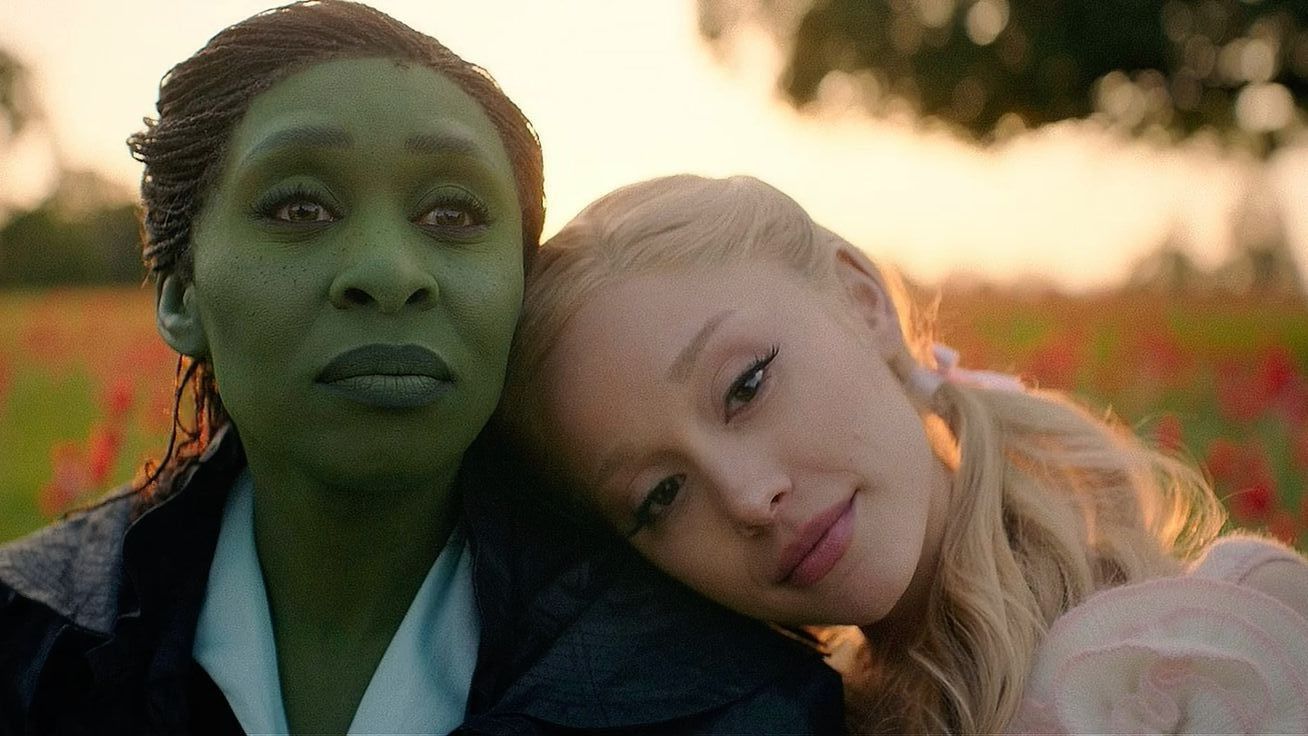
In the final song of the movie, “For Good” (which is also the title of the movie), Elphaba and Glinda have a final melodic conversation before the “death” of Elphaba. The themes of “wicked” and “good” are depicted outstandingly during this number. Elphaba starts with the limitations placed on her by society, and tells Glinda to look at her with their eyes, not hers. Elphaba knows that the citizens of Oz look at her like the embodiment of wickedness. Despite the Ozians collectively agreeing on the opinion that Elphaba is evil, the audience views her as the opposite. This complexity of a character is not only heartbreaking, but extremely relatable to many. Later in the number, both Elphaba and Glinda state their hesitance in believing they’ve been changed for the better. They then conclude that they have because they met each other. In a truly emotional finale, their unusual connection made them both better people, even if society perceived them as opposites.
What makes this finale have so much weight is that “For Good” has a double meaning. Being changed for good can both mean that each of the characters is changed forever or changed in quality. They both have been changed indefinitely after meeting each other, and their lives will never be the same. At the same time, they both have grown so much to become better people. This double meaning that’s up to the audience’s interpretation strengthens the depth of the movie so much more to resonate all the better. The title being Wicked: For Good emphasizes Elphaba’s wickedness. Without watching the movie, most will assume she’s wicked forever. However, when taking the title in the context of the movie, we know that her everlasting wickedness is just the film’s way of saying she’s righteous. The song is very intimate, making it the perfect finale to such a wickedly good production.

This prominent theme of reversed labels makes it resonate more to all watchers, myself included. Thinking back to the first number in the beginning of the first movie, “No One Mourns The Wicked,” we now understand what Glinda, the main singer during the song, refers to. The citizens of Oz perceive the meaning of this song to be that the Wicked Witch of the West isn’t mourned. However, the true meaning exhibits that she herself possesses the wickedness she’s describing. Glinda sings, “Goodness knows, the Wicked’s lives are lonely,” to emphasize her own loneliness after the seeming death of her best friend and fiancé. She’s perceived as good, but feels wicked inside because she was unable to save the most important people in her life. This song represents the theme of juxtaposition perfectly. Because of the resonating full circle moment of the movie, Wicked and Wicked: For Good are considered highly successful films that will inspire film-making and storytelling for years to come. It’s safe to say that like Elphaba and Glinda, taking part in wickedness has changed us all for the better.