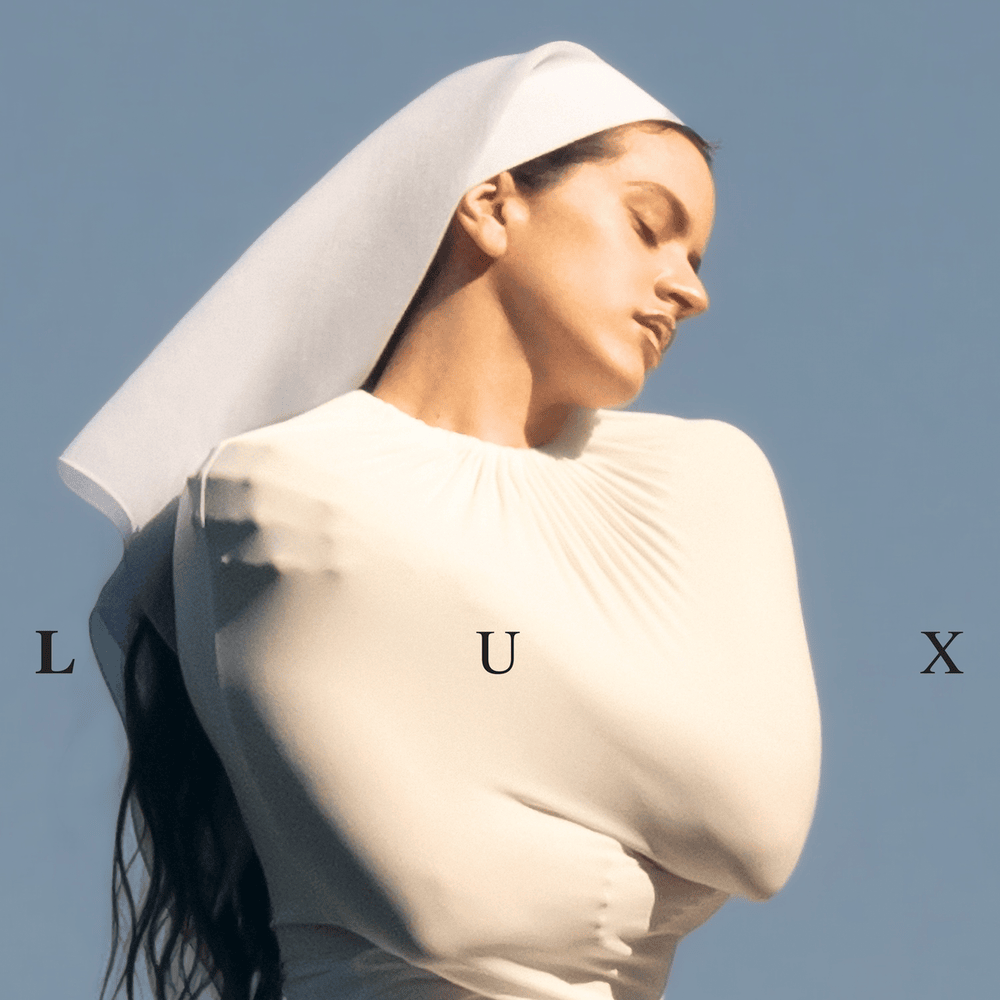

Rosalía has always been a student, as we all are at the end of the day. There’s no limit to how much we can learn from the past and what we can gain as creatives, and Rosalía concentrates this to the furthest capacity. There is nobody else molding music like she is today.
I was first introduced to Rosalía by my Spanish teacher in 2019. Even though I barely comprehended Spanish at all, her language was never a barrier for me. Whatever she was begging me to feel, I felt it without even understanding what she was saying.
Mixing traditional flamenco with pop, R&B, and hip-hop, her music was a result of her upbringing in the Catalonia region in Barcelona, Spain and also the teachings at her prestigious music school, the Catalonia College Of Music, which accepts only about 5 people per year. While taking bold choices for her thesis at that school, Rosalía’s result was her Latin Grammy Album Of The Year – El Mal Querer. Her breakout song, “MALAMENTE,” is my 3rd most streamed song on Apple Music to this date, thanks to years of revisiting and heavy rotation. Its artistic atmosphere alone has spoken to me for all these years.

After her 2022 electronic-heavy Motomami, which also won the Latin Grammy Album Of The Year, she’s spent the past few years reading hagiographies (biographies of saints), listening to classical music, and studying the various complexities that come from religion. Recording the album alongside the London Symphony Orchestra in just four days, the production is anything but minimalist, yet the audience who she has garnered over the years don’t question it a single bit.
When giving a statement on accusations of culture appropriation, she famously said that she “belongs to the world.” Singing in 13 different languages across this album alone, she’s never been afraid of learning and building from different parts of the world. Being from Spain, her Spanish and European roots are, in essence, the formula and meat of her music, but what’s made her climb and stretch to the furthest of her abilities is her talent to bend. In my definition, bend means combining and forming music from various parts of her culture and the world.
Lux is ambitious, graceful, conflicting, and best of all, new. Dropping her first single titled “Berghain” alongside Bjork and Yves Tumor, the internet was sent on a spiral of theories, translations, and Mike Tyson archival videos. The first time we hear her sing is with a German operatic verse. This track is a whirlwind. The orchestra has violin notes bouncing quickly, communicating a sense of an anxious longing to be freed of an all-consuming love. With lyrics on divine intervention and an explicit quote from a rant that Mike Tyson made towards a photographer, this song was challenging for a lot of people, which is good. We’ve gotten used to being spoonfed soundbites for TikToks to the point where if something isn’t straightforward, it’s scary. The music video that came with it has more symbols and easter eggs than I can possibly count; it’s definitely worth a watch as it’s one of the best I’ve seen all year.

Going back to the idea of belonging to the world, the second track “Reliqua,” recounts important moments in the various places she’s spent time in. She sings, “I lost my tongue in Paris, My heels in Milan, lost faith in DC, and a friend in Bangkok, A bad love in Madrid.” These lines pertaining to different places continue on for the rest of the track. Reliqua, which means relic in Spanish, represents the humanity of losing a piece of yourself through different places of the world and those around us, a recurring theme we see throughout.
One of my personal favorites, “Sauvignon Blanc,” works as a poetic plea to give up materialistic items in return for love. In the literal sense, she says, “I will throw away my Jimmy Choos.” Rosalía has become the face of various fashion lines, with a Calvin Klein campaign this year to name one. Writing a song about sacrificing what brings status in parallel to the sacrifices of Saint Teresa of Avila–who gave up her wealthy background for a life of devotion–is something we don’t see in the pop landscape, like ever. In a way, she’s poking fun at her own wealth and spot at the A-lister table, while also relating herself to somebody who died in 1582. Rosalía isn’t a saint, but Teresa of Avila was one. She uses stories like this to discuss ideas on intersectionality between faith and human fallibility, or a tendency to make mistakes. She, like Teresa, is attempting to gauge a space between something, whether that be spirituality or whether that be love.
On “La Yugular,” she promises that “For you, I would destroy the sky | For you, I would tear down hell.” Heaven and hell are backdrops for a heartbreaking final movement on Lux.

Lux isn’t a hard launch for Rosalía’s religious arc, but more of a soft launch into a project on digging deeper. Having a public breakup with Puerto Rican artist Rauw Alejandro in 2023, a lot of this album feels like Rosalía’s moments of reconciliation. She can laser her matching tattoo with Rauw off, but she can’t laser the pain and memory of her love.
The term “religious psychosis” is used to poke fun at people who turn to religion rather sporadically–particularly when something, or somebody, happens to them. Lux isn’t a turn to religion, it’s a turn to finding how prevalent our history is. We see patterns repeat and we see art being reshaped to fit whatever mold we may be attracted to at the moment, but what Rosalía is attracted to is telling something we’ve actually never seen or heard before.
Rosalía has mastered what people have always praised her for–her bending–yet, in her eyes, she’s looking to master something else. Most pop stars wouldn’t think of indulging in the lessons of world religions or studying classical music from hundreds of years ago when writing a new album.
As she reiterated during the debate on whether or not her music is pop on the New York Times podcast, she gets defensive at people questioning her. She makes pop music, and she wants the world to recognize that. Lux got 42 million streams on Spotify, nearly tripling in first day streams compared to her last album. This number alone set the record for the most streams in 24 hours for a female Spanish-language album on the platform. Pop music has a broad appeal to a mainstream audience, as did the Bible, and as did classical operas.
People from centuries ago have their own version of spiritual deep dives–whether that be religious textbooks or Mozart’s essentials. For us, we have Rosalía’s Lux.

Listen to Lux: https://rosalia.lnk.to/lux
9.1/10