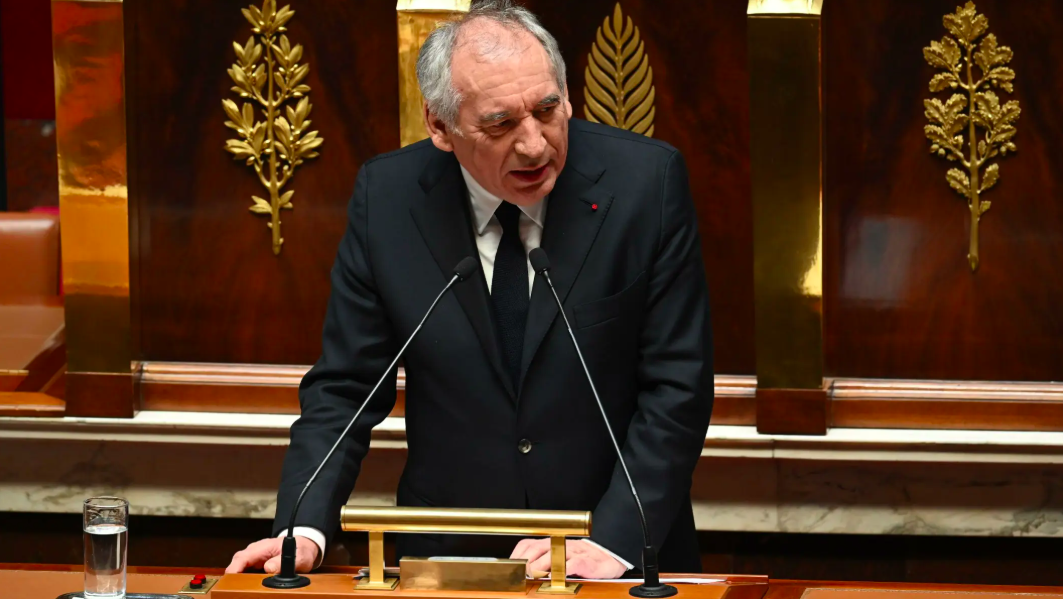
On Monday, September 8th of 2025, French Prime Minister François Bayrou received a vote of no confidence and was forced to resign, sinking his government amidst tense budget discussions. The centrist prime minister, appointed by President Emmanuel Macron, is the third of Macron’s prime ministers to be lost in the last 12 months, leaving France stuck in a political deadlock. Under the French political system, the president is elected but must then appoint a prime minister who conducts the affairs of government. However, the National Assembly (French legislature) is currently split between President Macron’s centrists, the hard-left New Popular Front, and hard-right National Rally. No party holds a majority and neither extremes have been willing to work with the centrists.
This political gridlock comes at a time of economic uncertainty with the French deficit of 5.8% of national output well above the 3% limit set by the EU. Such a high deficit has caused French debt to rapidly increase with public debt currently at 114% of GDP, the third highest in the Eurozone. This has caused serious concerns, as French 10-year bond yields (an indicator of economic stability) have been at their highest level compared to Germany (the benchmark for Eurozone bondmarkets) in four months. With intense agitations over the debt and the time for the 2026 budget vote nearing, François Bayrou developed a radical budget proposal, which aims to cut €44 Billion ($52 Billion) of spending and to remove two public holidays in order to curb the deficit.

Both left and right quickly declared that they would reject this austere budget, prompting Bayrou to take an incredible risk and stake his government’s survival on the line by calling a confidence vote on the issue. Bayrou reckoned that surviving a confidence vote would be the only way to force his massive budget through; however his gamble has backfired spectacularly. During his final speech to the National Assembly on Monday imploring members to support his administration and budget, Bayrou attacked those criticizing his gamble: “Some said it was unreasonable, some said it was too much of a risk. However I feel it is the exact opposite, the greatest risk would be to take no risk, to let things keep on going as they currently are.”
Bayrou also declared that allowing the deficit to continue at such a high rate would lead to a major financial crisis and painted his administration as France’s last chance to prevent that. A total crisis is not imminent, as bond markets didn’t even react much to the expected outcome; however, by refusing to tackle the problem at all, the National Assembly is digging France deeper and deeper into a hole. The longer France waits, the harder making those necessary reforms will be. Even with all of Bayrou’s pleading, “Reality will remain relentless: expenses will continue to rise, and the burden of debt, already unbearable, will grow heavier and more costly,” the hard-left and hard-right refused to listen, sinking his government and throwing France into another political crisis.
This is compounded with the fury of the streets, as a grassroots social media movement called “Bloquons Tout” (Let’s block everything) has planned a general strike and nationwide shutdown on September 10th to protest Bayrou’s proposed budget and its cuts to social spending. This movement is unaffiliated with, but backed by, the trade unions which have called for further strikes on September 18th.

In an effort to get the situation back under control, Macron has taken no delay in appointing a new prime minister, choosing Sébastein Lecornu, a political survivor and the outgoing defense minister, as the new premier. Lecornu now faces a more divided assembly than ever, intent on forcing new elections that Macron is fearful of calling. Given polling puts his party at a dismal 15%, an election would likely result in a National Rally win. In order to have any chance of passing a budget, the prime minister will probably have to cooperate with the moderate leftist socialists, however their demands for tax increases on the ultra-wealthy along with smaller spending cuts than Bayrou envisioned will make the business friendly centrists hesitant. Lecornu is more center-right in comparison to other possible candidates, making cooperation between him and the socialists further unlikely. Still, something must be done about the deficit, even if not as thorough as Bayrou envisioned.
Whether Lecornu is up to the herculean task remains to be seen. In all likelihood, he won’t fare any better than Bayrou, and until new elections are called, France’s political inertia is set to continue.
France’s struggle over its deficit should be a warning to the American government, as the reckless spending of President Trump’s “Big Beautiful Bill” is making debt grow faster and faster. Eventually, America’s reckoning with its debt will have to come, and when it does, Congress should beware the fate of Mr. Bayrou: and perhaps all of France as well.