(SPOILER FREE ARTICLE)
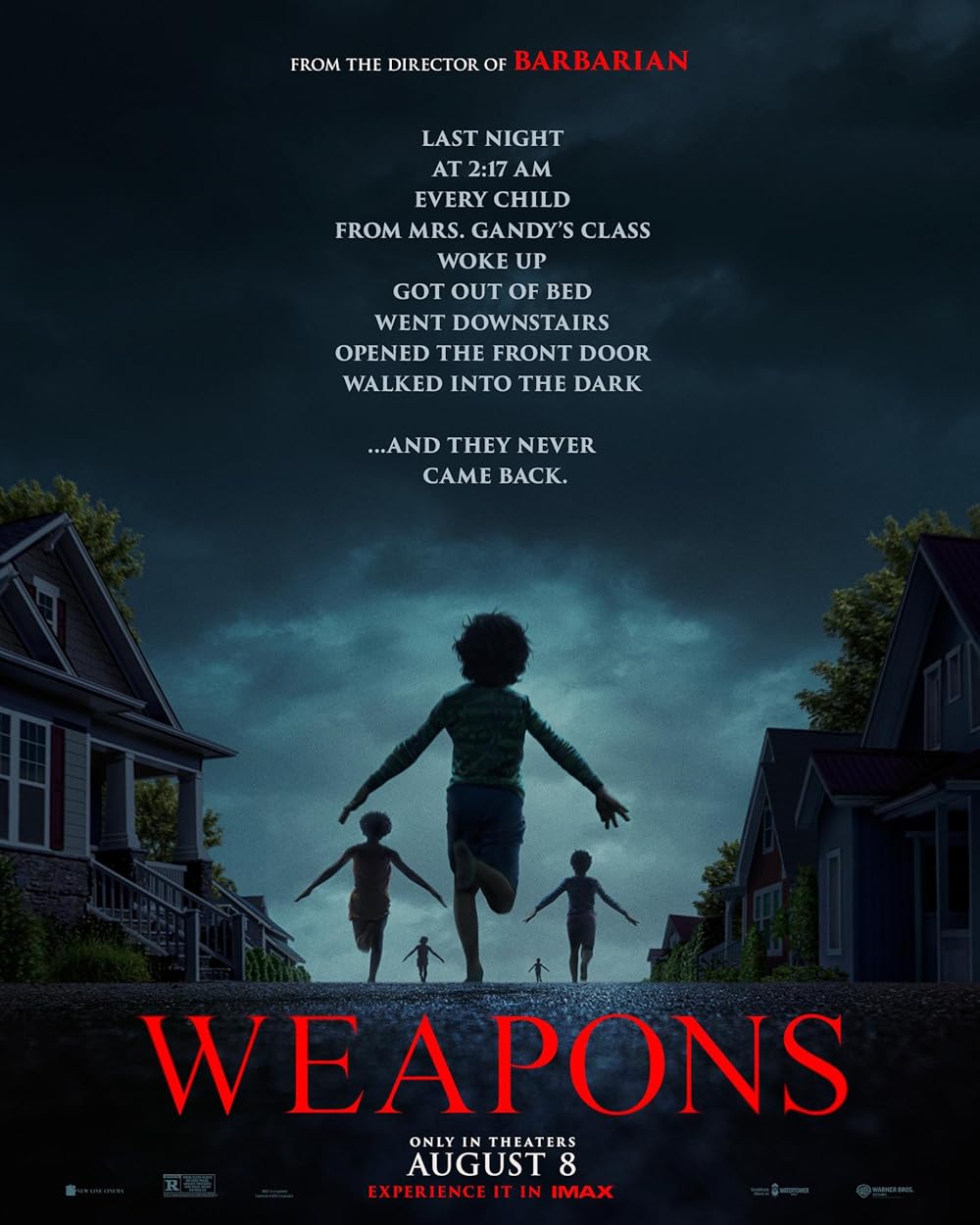
The film Weapons (2025) begins with a voiceover of a child. She says, “This is a true story that happened right here in my town two years ago. A lot of people die in a lot of really weird ways…” Without letting us in on any of our characters, where we are, and what may be going on, our narrator lets us in on a secret: people die, and it’s a strange story. What’s important about this hook is its mystery. As the dialogue continues, at 2:17 AM on a Wednesday, an entire class of students got out of bed, walked out of their houses, and never came back. As the clock hints, two out of the nineteen individuals in the class didn’t disappear that night, but why? Was it a choice? Why only this class? Why in the middle of the night? We ask the same questions more than you would imagine, as life constantly faces us with the word “why.”
Regardless of what the film decides to reveal as the cause to the effect (though I highly recommend watching it all unfold yourself), it reminds us to learn from what we can’t explain. The parents are not only in shambles and extremely distressed, but mourn something that makes absolutely no sense. Who can the parents blame for something that has no explanation? We have an answer, and it’s the class teacher, Ms. Gandy. It isn’t really the reason for the kids running away, but an easy scapegoat. A situation completely outside of her jurisdiction becomes something that’s placed in front of her to give reason to, lack there of. Rather than mourning, she’s left to abuse substances and hide from someone who’s painting the word “witch” on her car. My point being, Ms. Gandy’s own experience with this tragic time became even more isolating as her own internal blame was also reflected onto the angry parents of her third grade class. These students not only left, but left without saying anything. Looking for reasons in life, people begin to sabotage those around them and themselves.
In the world of Weapons, “you can’t blame yourself for something you had no control over” is a completely overruled affirmation. A film so intensely introspective, as its formatting consists of multiple point of views and timelines, it manages to create an on-the-nose yet extremely hard to catch allegory on tragedy. The kids running off into the night sort of resemble this loss of innocence as it comes in waves that crashes and hits you whether you expect it or not. Losing innocence can mean getting older but it can also mean being faced with something out of nowhere, like someone disappearing suddenly. Regardless, your mind and body have to move through tragedy in unfamiliar ways.
The director, Zach Gregger, opened up about how a close friend of his died very suddenly in an intense accident, which morphed into the starting point of his inspiration to write Weapons. Tragedy, for the most part, is unexpected and unexplainable, no matter how much we dig and find someone or something to blame. Finding comfort with each other and ourselves is the key to getting through the questions life throws at us.
Weapons is still in theaters for a short amount of time, and will be able to stream on HBO Max™ likely later this year.
@spencergerwig on Letterboxd