Music has been a way that people have connected for thousands if not tens of thousands of years; it is an influential and powerful tool that can be utilized by almost anyone. We have seen this usage happen many times throughout history in the form of protest music. Protest music is used as a way for people to bring awareness to problems they see in society, for example, it was used in the Civil Rights Movement, the 60s Anti-War Movement, the Women’s Suffrage Movement, and the Anti-Slavery Movement.
During the Civil Rights Movement and the Jim Crow era, artists like Billie Holiday, Nina Simone, John Coltrane, Sam Cooke, and many more amazing artists performed passionate ballads calling for social reform and an end to racial segregation. Billie Holiday had a very moving song called “Strange Fruit,” which was originally a poem by Abel Meeropol (under the name Lewis Allan) about the horrific lynchings happening to African Americans. Holiday sang this song at many of her concerts which quickly allowed it to gain influence and eventually became a powerful anthem for those wanting racial equality. But with this came many people who didn’t want her to sing it; some viewers shouted and others walked out while she was performing the song, the hatred even going as far as some states banning her from singing the song all together. Although many wanted her to fail, she ended up performing many concerts at Carnegie Hall in NYC which helped her music and message spread even farther.

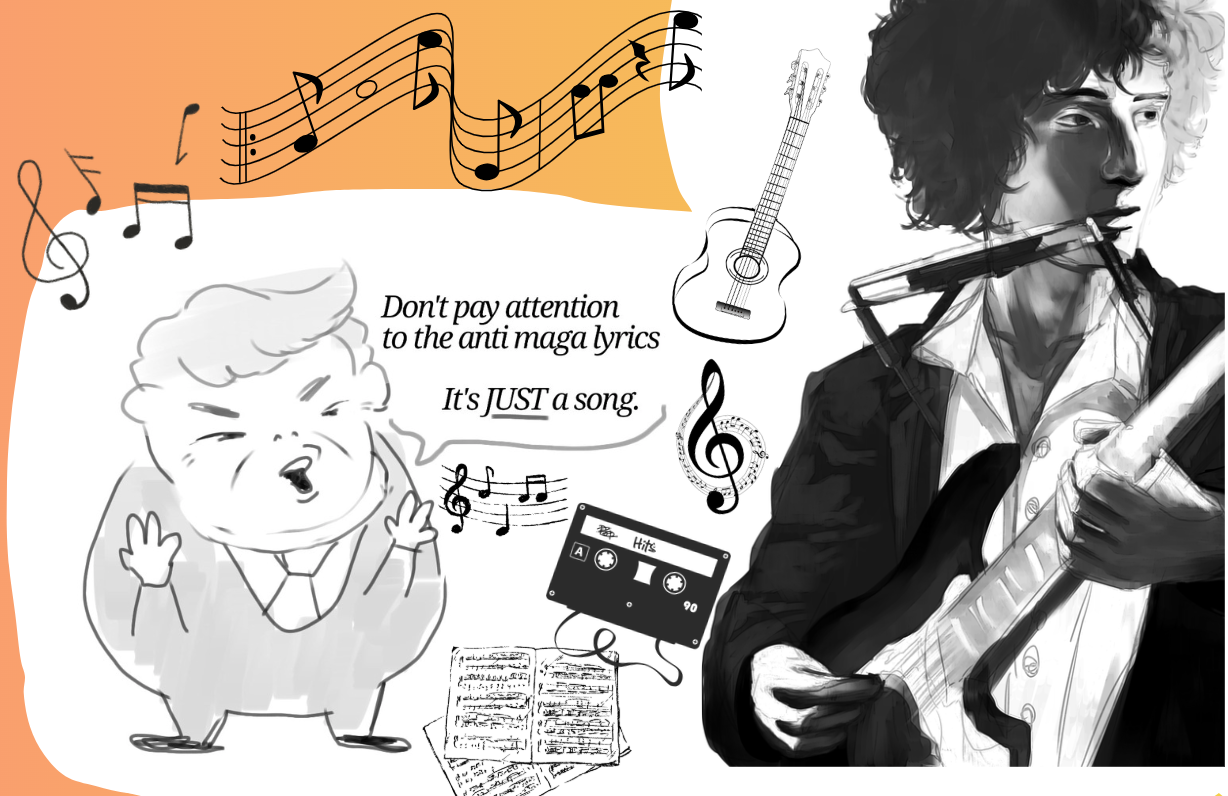
Another popular time for protest music was during the Anti-Vietnam War Movement from the 60s and 70s. Some notable artists from this period include Bob Dylan, Joan Baez, Bruce Springsteen, Phil Ochs, and many others. The anti-war movement was all about wanting peace for everyone and more specifically wanting the Vietnam War to end. One popular song from this era is “Blowing In the Wind” by Bob Dylan. This song criticizes war and those who turn a blind eye to it. The line “Yes, ‘n how many times must a man look up / before he can see the sky?” illustrates how awful war is and how much it negatively affects people. This song also gained popularity in the Civil Rights Movement.

Recently in the USA there have been many protests against our current government and how they have utilized Immigrations and Customs Enforcement to tear apart families, deport innocent people, and kill American citizens. This has caused protest music to once again gain in popularity; for example Bruce Springsteen (an anti-war activist and musician) recently put out a song titled “Streets or Minneapolis,” talking about how inhumanely ICE is treating people and how they are practically turning into Trump’s army to get rid of anyone who stands against him which is shown in the line that goes: “King Trump’s private army from the DHS / Guns belted to their coats / Came to Minneapolis to enforce the law / Or so their story goes.” Many old protest songs can also apply to modern-day protests such as Woody Guthrie’s “This Land is Your Land” which has recently been used across social media as a pro-immigrant song as well as a pro-environment song. Nonetheless, more modern protest songs like Green Day’s “American Idiot,” which they have recently been changing the lines of at concerts to connect with modern politics and to show their hatred for MAGA, Trump, and the Trump Administration as a whole, have taken inspiration from older protest songs.

Protest music is a powerful thing that we need to pay more attention to, especially during times like these where so many protests are happening. Protest music is meant to be heard. It is meant to be powerful, it is meant to bring people together, and it is necessary to share injustices that need to be solved.
Sources:
- The Nonviolence Project – A Brief History of the Protest Song (in the USA)
- Carnegie Hall – Six Jazz Classics and the Fight for Civil Rights
- Rolling Stone – The 100 Best Protest Songs of All Time
- American Songwriter – Behind The Meaning of Green Day’s Protest Song “American Idiot”
- United States Foreign Policy – Protest Music of the Vietnam War