Since September 2025, the Trump Administration has declared the US as involved in a “non-international armed conflict” with various drug gangs in Latin America and used this supposed conflict as a pretext for a dozen strikes against alleged drug smuggling boats in the Pacific and Caribbean. The legitimacy for these strikes is flimsy, as Congress has not officially declared war or authorized the military action. Concerns have also been raised by the UN whose Human Rights Commissioner Volker Türk stated, “airstrikes by the United States of America on boats in the Caribbean and in the Pacific violate international human rights law.” These extrajudicial strikes, which have already killed at least 61 alleged drug traffickers, have also been accompanied by a massive redeployment of US naval assets to the Caribbean, with the powerful aircraft carrier USS Gerald Ford set to arrive in the region in early November.
Strikes on small boats in the Caribbean are unlikely to accomplish much as most drug smuggling occurs through the Pacific and such strikes on expendable boats do little to deter gangs anyways. Instead, the military buildup in the Caribbean is part of a new clash between President Trump and his autocratic counterpart in Venezuela, Nicholás Maduro. Trump has consistently railed against Maduro, imposing harsh sanctions on Venezuela during his first term and describing the nation as a ‘narco-state.’ While Maduro denies most of Trump’s allegations, Venezuela is certainly the perpetrator of numerous human rights abuses and has consistently rigged elections, most recently in July of 2024, when Maduro claimed victory despite an accredited paper trail that showed the opposing candidate Edmundo González to be the true winner.

So what is this showdown in the Caribbean really about? Ostensibly drugs, but some US officials have expressed another goal: regime change in Venezuela. President Trump has not specifically commented on this allegation, however he has authorized CIA covert operations in the country and the amount of strikes on boats off Venezuela’s coast has been a significant show of force against Caracas (Venezuela’s capital).
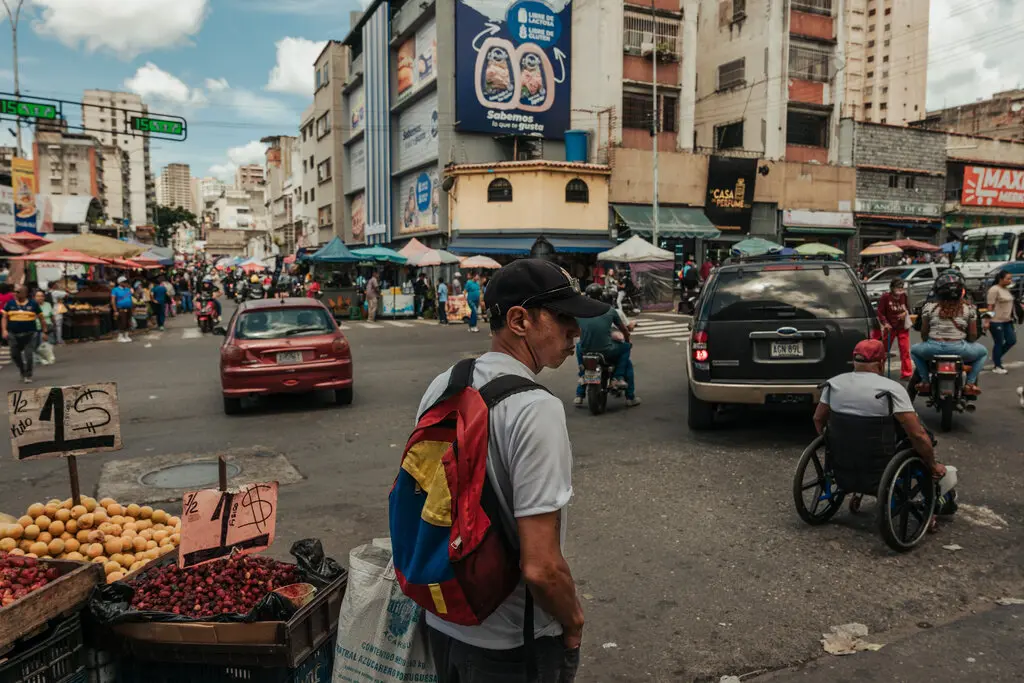
Maduro has clearly been rattled by this, appearing in assorted hotels rather than his usual residence in the Miraflores Palace. He has also ordered numerous military exercises and even tried to appeal to Trump’s transactional diplomacy, offering access to Venezuela’s oil reserves in exchange for positive relations. However, on the ground in Venezuela most citizens are opposed to Maduro’s dictatorship and many take the position of opposition leader and recent winner of the Nobel Peace Prize, María Corina Machado. For her part, Machado has actually supported US threats against Venezuela, hoping that American involvement will be the deciding factor in Maduro’s downfall. While the country is proven to be behind Machado, voting for Edmundo González (who was operating in her stead at the last election,) means little because power is concentrated in the powerful army and other armed drug and guerilla groups who presently support Maduro.
With all of his forces in the region, Trump has a couple options to proceed with. First of all he could withdraw, either refusing to launch attacks on Venezuelan soil in its entirety or limiting any such strikes to drug-related infrastructure entirely. If such limited strikes were conducted, Trump could probably claim victory over the ‘narco-state’ without embroiling the US in a direct war with Venezuela, much like his quick airstrikes against Iran in June of 2025.
Escalation is another option. The US has the capability to launch strikes across Venezuela targeting not just suspected drug related infrastructure but also military installations. If regime change became an objective then Trump could try to take out Maduro covertly or simply hope that a disgruntled faction in the army overthrows him. US boots on the ground would likely be unpopular but it is unclear how much progress American air power alone could make. Even if Maduro were to fall, peace might not be guaranteed as some like Machado hope. Resistance from the army or ex-Columbian guerillas loyal to Maduro could prevent a peaceful transfer of power. Such a case might require more significant US intervention to prevent the nation from falling into chaos, but Trump’s dislike for foreign entanglements might make him hesitant to prop up any new Venezuelan government.
What exactly will happen next is still unclear. Some news sites have reported that attacks on land targets are imminent, though Trump has rebuked these claims on October 31st, telling reporters that he was not considering such strikes at the moment. However, as always with President Trump’s foreign policy, this could rapidly change. The status quo of small boat strikes is having little impact on drug smuggling, so whether this naval combat is simply more political theater or an actual prelude to direct conflict with Venezuela remains to be seen.
Sources:
- Reuters – Venezuela opposition split over possible U.S. action
- Reuters – Trump says he is not considering strikes within Venezuela
- ABC – What would strikes on Venezuela look like? US target list expected to include ports, airports used by drug smugglers
- CBS – U.N. human rights chief says U.S. “must halt” strikes on alleged drug boats to prevent “extrajudicial killing”
- New York Times – Trump Administration Authorizes Covert C.I.A. Action in Venezuela
- Miami Herald – Trump’s Caribbean military buildup: a war on drugs or a regime-change campaign?
- The Economist – Venezuelans wonder if America will bring down Nicholás Maduro